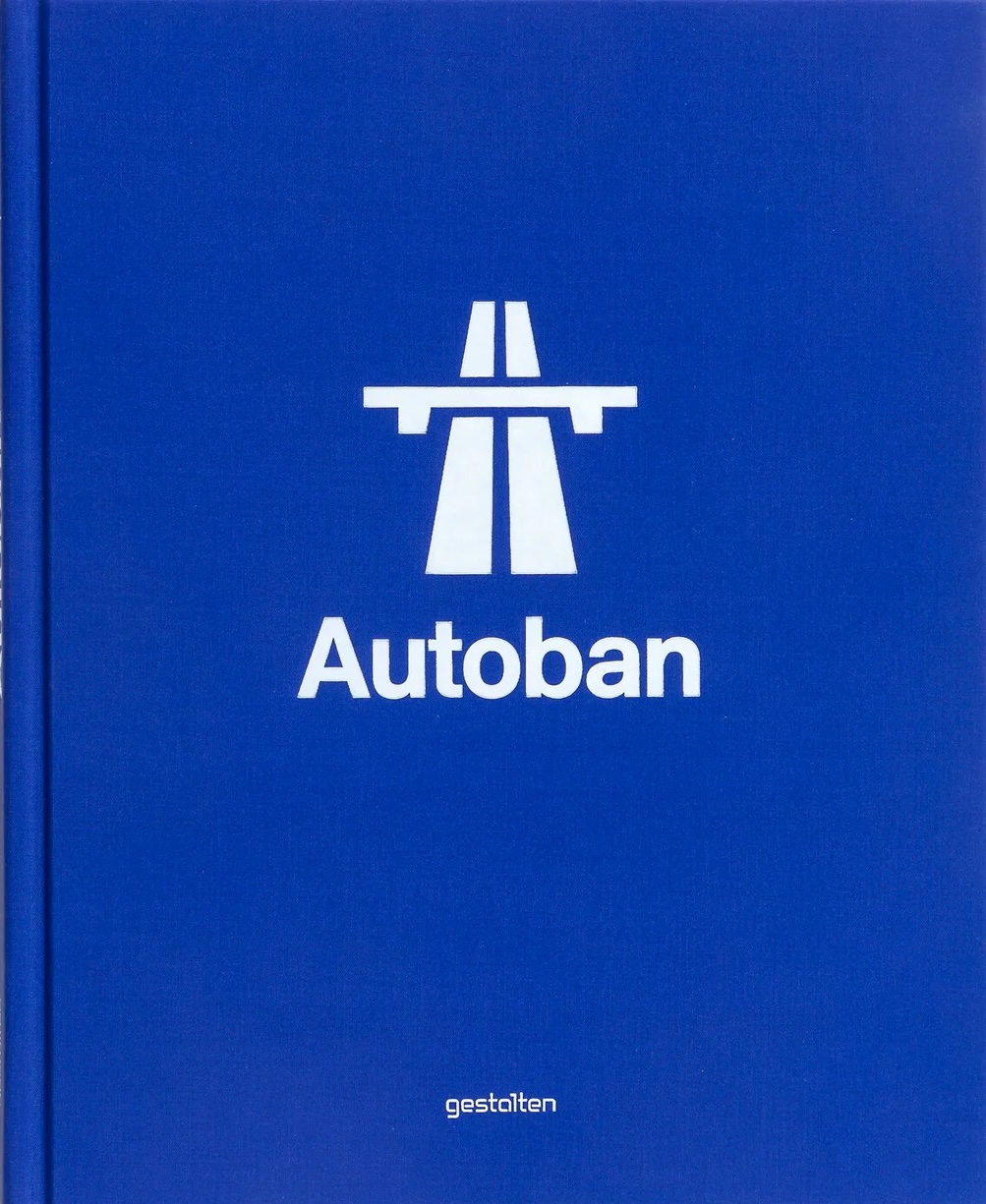
Autoban: Form. Function. Experience, Gestalten, 2014
In 1997, the artist Hale Tenger exhibited an installation titled “The Closet” at ArtPace San Antonio, Texas. The work included a stark room illuminated by a fluorescent light. A dining table occupied the space, with one of its long sides propped against the wall. The glasses and plates on the table seemed to be leftovers from different dining sets. In the background, announcements from a radio blared statistics about guns, a seizure, and captured terrorists. The news items were a conspicuous reference to the early days of the dictatorship following the 1980 military coup in Turkey. At the time, the artists were not only referring to the oppression and gloomy atmosphere of the era but also how the repression cascaded into the domestic space under all the entrapments of a patriarchal gaze.
Like all profoundly moving works, Tenger’s installation triggered many ideas and questions. Why would any family shove a dining table against the wall and lose a sense of basic congeniality? Is the table not the very definition in many cultures of communion and negotiation? Is it not the precise object that families, friends, and enemies sit around? And what kind of regard can people hold for each other when eating from different plates and forks under a tormenting fluorescent light?
The installation summoned situations lived and witnessed, and its memory echoes a range of perpetuating anxieties of Turkey, one of which is spatial. The context is a middle-class summer scene from a second home. These homes are filled with objects and semi-discarded, undesired furniture, with drinking glasses and serving plates handed down from what were once complete sets of six or twelve-place settings. In short, it is good enough for a rarely frequented holiday home. These living spaces were not put together with the logic of frugality or prudence but instead with a pathological sense of lack of self-respect and a visual capacity developed in favor of stark utilitarianism. Why would second homes, usually summer homes, become the dumping ground of the first home in the city? The place to make final use of aged cutlery, utensils, and furniture before handing them down to housekeepers.
Europeanization arrived in Turkey with forceful recipes to catapult a traditional culture to Western modernity and (re)form the social body in the surface contours of a new decorous citizen that held its past in disdain. A fragile thread traverses Hale Tenger’s “The Closet” and Gülsün Karamustafa’s “Etiquette.” “Etiquette” is a full-on display that mimics a sumptuous banquet table surfeited with glasses, utensils, and service plates. The work includes images from a French book on etiquette that was initially published in Paris and translated more than a century later in 1927 into Ottoman Turkish, printed in Arabic script. A year later, the Latin alphabet was adopted, and the book fell into disuse, becoming an ironic symbol of belated modernization.
This double adaptation of the mores and the script ignores cultural and local differences while prescribing codes of conduct for everyone, including servants and grooms. It ingests the visual language and manners of the West in an attempt at Europeanization while championing a new social hierarchy. Using the illustrations from the original book, the installation “Etiquette,” in the form of an elegant dinner table, visualizes the arbitrariness of these social rules and the absurdity of a failed translation project.
The whole of the twentieth century for Turkey is built on a process of “becoming” with no end in sight. Even if the peremptory policy of inventing a new citizen subject from dress code to manners to use of space was abandoned after World War II, the patronizing approach was internalized and remained active. The fervor of the 1960s subsumed the norms of the early Republic, but things got much more complicated from then on. No society transforms in how it is forced to perform, and the specificities of making space and morphing spaces have become quite particularized.
The Turkish state has administered “public space” in ways that would never become “public.” There was never a question of ownership regarding public space. It was the state; hence, the public did not claim public space. Often left in dire conditions and owned by no one, it was open to illegal, tolerated, or condoned annexations. This space kept affecting its opposite, “the private,” where the clash between modernities and existing ways of living came into contact and shaped each other subtly and nonviolently.
Modernism and Art Deco arrived with a mission through overzealous modernist architects such as Seyfi Arkan and Sedat Hakkı Eldem. Like their peers of the time, they took it upon themselves to design furniture for their buildings and dictate how to move around a space and be inculcated by it. Import capacity and financial means were radically limited. Industrialized carpentry and furniture, which equaled mass production, was, at best, a yearning. Minorities mainly provided local furniture workshops and artisanal labor with a historical affinity for European-style furniture. All of these shops were in the cosmopolitan Pera district of Istanbul, with a noteworthy concentration at exactly the location of the present-day Autoban offices. Furniture acquisition may have been an anomaly for Turks at the time. With accelerated modernization, the new “civilized” citizenry was encouraged to decorate homes via newspaper references and advertisements.
Ankara is perhaps a different story: the new capital city had secured but later lost under harsh urban transformation in the past decade the status of being the symbol of aesthetic modernism in early republican Turkey. Last year, SALT in Istanbul organized an exhibition displaying a complete set of furniture designed specifically for a living room in a housing cooperative in the 1960s. The “Salon” project revealed a moment that represented the characteristics of refined taste, particular to the capital. The furniture design by Butik-A was minimalist, and the Bediz-Kamçıl architecture office building was simple and economical yet elaborate. Together, they would evoke a sense of European ideal materialized in residential Ankara of the 1960s. However, it is evident that the owners addressed these qualities and not by a city-wide culture. Butik-A was only one of the shops in the city serviced by the same carpenters. Still, the delicate moment captured in this apartment points to the potential enthusiasm for the new life in the new country, which is much more vivid than in the adapting old Istanbul.
Let’s fast forward to the conventional bourgeois dwelling in mid-century Istanbul, the context to which the novelist Orhan Pamuk turns with a vengeance time and again. The salon and salle-à-manger, one or one-and-a-half rooms, used to be standard in Istanbul’s upscale neighborhoods. These apartments opened onto small entrées, allowing for a clear separation between the guest and the living quarters. A second door often led directly into the kitchen and the pantry. The salon and the salle-à-manger, often in a simple L-plan, were always off-limits to the family, especially the children. The almighty door was to be opened only on holidays and special occasions. The salon would remain equally eerie even when inhabited, with a lacquered table top ever shiny like a mirror, the bibelots and trinkets in odd configurations, a framed photograph or two on the side tables, a silver case with cigarettes with their parched tobacco inside, the chocolate box and the Pe Re Ja eau de cologne. Often, slippers of various sizes would be provided at the entrance, creating crazy traffic jams as visitors took off their shoes and searched for a pair that would fit. These details may have changed over time, but one thing has stayed the same: the oversized couch with its back against the wall has always been there. No matter what happens, the sofa will always be pushed against the wall. This cultural reflex perhaps has much to do with the migration waves that are the common denominator of the hybrid visual compositions that manifest themselves in major urban centers. The movement from rural to urban not only appropriates but also produces a new culture. Halil Altındere’s legendary work “My Mother Likes Pop Art because Pop Art is Colourful” (1998) is a photograph of an old lady sitting on a floor sofa covered in multicolored quilts and pillows. She holds a book on Pop Art and views it with attention and respect. One of Andy Warhol’s Marilyn Monroe paintings adorns the cover. Hence, we look at two women in the same instance: the older lady’s decent and well-mannered posture and the pleasure-inducing image of Monroe. The colorful universe of this space suggests a modesty of aesthetic consideration and a particular way of making domestic space. The photograph looks staged, with the Pop Art coffee table book perhaps placed in the subject’s hand by someone else. She is looking, but is she reading? Does it even matter because the desired effect is that the colors of the book cover are in perfect harmony with the colors of the interior? Perhaps the circulation of cultural forms is often based on an endearing misunderstanding. To “read,” she may have to stand up and be vertical. Reading pop art without leaving her habitus and posture would imply a change in her social imagination. The woman in question is, in fact, the artist’s, Halil Altındere’s, mother. She has taken her shoes off when entering the home, leaving all residue of the outside world, but the outside sneaks in the form of a book, and accentuated by the artist’s presence in the room, a colossal shift occurs, laying bare the polarity between two worlds and two spaces.
What unites the kitchen table in Tenger’s “The Closet,” Halil Altındere’s photograph of his mother, and the couch (diwan) described above is their proximity to a wall. For most of Turkey, as in the Southeast Mediterranean, contraptions such as chairs, tables, and couches have been around for a little over a century. The middle is cleared and constantly donned with carpets; a low table is a prerequisite between a room’s sitters. Nilbar Güreş’s “Living Room” (2010) from her Çırçır series –an amazingly astute and funny photographic work– throws four ladies onto such armchairs and couches, establishing dumbfounding hierarchies between them, from bare feet to baggy trousers, to stockings, one sitting by herself on a sofa. In contrast, the other three are all lined up on the other side, squeezed into a loveseat and an armchair. The loveseat and the armchair are arranged in a row and have their back to the window. The couch angled at 90 degrees to this assemblage is pushed against the wall: this layout is, in fact, a local cultural standard. The room’s decoration is somewhat iffy with a single patriarch overseeing them, his presence suggested through an oil portrait, perhaps referencing four wives, one of whom seems to be the favorite. They all seem anchored to the room in various states of fusing with the space.
It is always wondrous how a culture repeatedly composes the same space while adopting new tools and technologies, how the new is invariably incorporated into an existing habitus, producing odd juxtapositions, and, most importantly, how long it takes for new tools to set themselves free from traditions and follow their potential destination, or even better, produce new composite situations.
Even today, what happens when the newly urbanized cultures of multiple beliefs and origins, in their colorful and vibrant multitude, seek the subdued palette and general minimalism of IKEA? Like everywhere else, the company has been very successful in Turkey, with five outlets and a stream of customers from all walks of life. How is globally popular no-frills minimalism and instant comfort incorporated into the home? Who is forced to adapt to a situation, and what is compromised along the way?
The mutation of the stool and sofa culture to the chaise and table has been an endless negotiation between resistance, acceptance, appropriation, and morphing. Even today, when looking at the side streets of Istanbul, one sees people perch on low stools and tables, and shopkeepers prefer the efficiency and agility of the stool over the chair as the stackable plastic injection mold chair looks somehow more incognito and is perhaps held in contempt for its industrialized appearance. Moreover, close to the ground and without a back, stools provide a stronger connection to the earth. They are not objects of vanity. This allows them to be used as a consensual intermediary between the rug, sitting on the floor, and the chair in many places, including the courtyards of mosques. Even though they are not solely local inventions -with the molds coming from China- the abstraction of their materiality from symbolism is clear.
The ever-present and internationally internalized plastic injection mold chair deforms nicely with each mold, and this physical adaptation can be seen in a manipulated photograph by artist Aydan Murtezaoğlu. The work’s title, “Family Room Upstairs,” is based on the customary sign or greeting at traditional coffee houses and restaurants, in which families are offered a separate abode so as not to cause any inconvenience to the regulars. In the image projected on the ceiling, the family observed from below looks like it is floating under blue skies. The image mimics the Baroque splendor of the ceiling frescoes and sanctifies the run-of-the-mill middle-class family. The cheap, mass-produced plastic chairs and tables with dirty legs strip away any charm and dilute the imagination.
A story of Turkey’s Twentieth Century through the making of domestic spaces is as of yet unwritten, how a place negotiates between traditions and modernities, how the individual body is shaped at the crossroads of civilizations, the traces of which we walk on, how social and economic classes are translated into interior spaces; how religious beliefs shape what goes on the walls; how immigration and existing city conditions make new intimate zones; how a globalized circulation of objects and pieces of furniture find themselves in this perpetual flux, we do not know. We also do not know much about the internal logic of seemingly mute objects and their travel in time.
When modernist furniture became more affordable in the 1960s, the early Republican reflex for the new became visible in middle-class households: the inherited aversion for the older ways, reinforced by an expanding market, unleashed the impulse to decorate with the newest and the latest. The following generations, however, longed for the pre-republican interior aesthetic. At the same time, their children are now instinctively drawn to their grandparents’ design choices, which explains a bit of the penchant for Autoban’s cozy and optimistic modernism.
 vasıf kortun