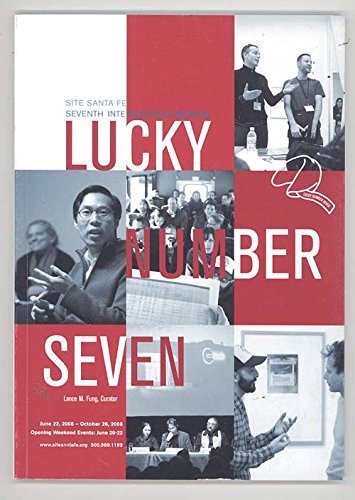
Work and bags produced by the artist, “Lucky Seven”, SITE Santa Fe 7th International Biennial, 2008
Vasıf Kortun: You know the story of Platform intimately. I am curious as to how the institution looked to you? How do you view its background? What were some of Platform’s intentions that are articulated in your mind? What is/was this place to you? How has it changed over the years?
Ahmet Öğüt: I was involved in only one exhibition, but Platform meant much more to me than that. Early on, it was an informal school for me, a unique opportunity to spend days in the archive, watch the videos, and read books and magazines. In Ankara, where I did my BA, I could find only one university library; they had only books and magazines and these were not updated regularly.
VK: If Platform was an informal school, what kind of informal school was it? Everyone is having a temporary academy these days. Other places also provide publications or videos… How does Platform compare?
AÖ: Platform gave me the opportunity to see videos and real works in its archive. I don’t think there is another library like this that has visual and published material within the context of contemporary art.
VK:: Were we special because we were exploiting the weaknesses of others?
AÖ: Platform, unlike standard libraries, is organic. There are also other practices too, lectures, meetings, etc. Platform has been addressing all these areas: filling the holes, the gaps, the missing points… Of course, in the beginning, it was quite hard to enter, as institutions can look cold from a distance. I would ring the bell and enter the door, and without saying hello to anyone, I would walk through to the archive room; but by the time I got to know you, November [Paynter] and others… it turned into a dialogue, exchanging ideas and experience with the other artists who have been at Platform, then the residencies took an important role. After that initial period, what I learned (basic visual and content knowledge) from Platform moved to a practical and friendship level, and my experience developed further in that way.
VK: Last year you married an artist who you met at Platform! And in fact you actually got married at Platform Garanti Contemporary – it was the first-ever use of Platform as a Wedding Center!
AÖ: That is absolutely true! If you hadn’t invited Pilvi [Takala] to the residency and biennial in 2005, I wouldn’t have met her. You see how we transformed the institution by practical methods.
VK: During a public conversation at Platform, a colleague said that we were a main-stream institution and it blew my top off. Another colleague told me last year to stop acting like an initiative. The complexity was that we meant to be neither. However, I do not want to evade this question, it is just that I believe what we formed is something else that begs to be defined.
AÖ: There is no mainstream institution in Turkey yet. Does “mainstream refer to money or just power itself? If it is just power, where would it come from? If Platform managed to become a successful institution internationally, it is because of strategy, not because of money.
VK: What is the relationship of power to force?
AÖ: Platform didn’t become what it is today in one night.
VK: We have been ‘powerful’ in international networks without being at all locally so; the institution was deliberated over many years; it was not incidental… It was like: let us do the thing for which there is no demand.
AÖ: It is not a one-night institution. I can see your force since early 1990s behind it… The issue is how one can participate in this institution… If you deny yourself, from the beginning, to enter the Platform building, you can never know how you can take part. I know some people were against entering that building, after two years they accepted a studio there! They had a prejudgment to any powerful looking institution. But then eventually they realized that they had found the perfect place to produce with total freedom. Esra [Sarigedik] saw me once in the corridor years ago, and said “You are the ghost of the Platform” because I wasn’t saying hi or bye when I came to Platform, I was just there, spending time in the archive..
VK: Do you think the lectures were successful?
AÖ: Lectures were successful for me. I learned English partly from the lectures. But there should have been more audience; it was a language issue. I miss the place, but I am lucky to be at the Rijksakademie. They organize lectures such as Michael Blum, Carlos Basualdo, Philippe Pirotte… some of the same people who have been at Platform already….
VK: They never invite me, not to teach nor anything else.
AÖ: That means you are not main-stream.
On Ahmet Öğüt
Ambiguity lingers in the work, resolve, and character of Ahmet Ögüt. Such uncertainty prompts questions rather than providing answers. It is underscored by a self-assurance that is neither arrogant nor overly ambitious; rather, this sensitivity derives from a personal, often humorous perspective.
The one-liner works, in-your-face statements, and use of political irony prevalent in works made by Turkish artists in the nineties have been replaced by works produced through a more subtle, more inquisitive, and multidimensional approach to artmaking. This younger generation of artists, of which Ögüt is one, chooses neither to be restricted by form nor medium. Their openness to collaboration has fostered diversity in artistic practice and thought. These artists have gained the confidence to experiment freely without assuming an end product, which denies the viewers of any expected outcome, making the work far more interesting to discuss.
In Somebody Else’s Car (2005), Ögüt transforms two random cars using readymade paper cut-outs. Unbeknownst to the owner, he clads the first entirely in yellow; with the final addition of a boxed sign on the roof, the car adopts its new identity as a standard Istanbul taxi. On the flanks of the second car, he applies graphics, and on the roof, a blue, white, and red emergency siren. Once again, the formerly plain white car is transformed into a police car. Ögüt accomplishes each makeover as if performing an act of vandalism, and yet his actions have no real consequences, except for creating unexpected effects of confusion, befuddlement, and amazement in the owners’ minds.
Light Armored (2006) is a short animation that shows a camouflaged Land Rover being hit by small stones thrown by an unknown source. It is obvious that this vehicle belongs to the army and yet the attack is pathetic, almost comical, as the stones bounce off its armor without causing damage or miss altogether. Played on a constant loop, the work speaks to the present and future states of our global society. It is both an anti-war gesture-—against all camouflaged and normalized tools, which harm humanity and world peace-—as well as a comment on the futility of combat.
The video Death Kit Train (2005) presents in detail an ordinary, simple activity occurring in an extraordinarily slow manner. A red car slowly comes into the frame. Upon first glance, nothing unusual happens. However, after a few seconds pass, viewers become aware of the fact that the car is not moving on its own; rather, a bunch of people are strenuously pushing it forward. Ultimately, in the last frame, viewers realize that the people are pushing each other.
A car is once again used in Short Circuit (2006). In this video, Ögüt captures an anonymous suburban street that is illuminated only by a weak streetlight, and occasionally by the lights of cars passing by. Viewers are only able to decipher fragments of the activity occurring in the dark by means of the intermittent passing car lights. The artist frustrates our ability to see and therefore comprehend what is happening, thus forcing us to engage in the process and the production of speculation, which inevitably points to our subjective constructions about everything that could happen on a street at night.
 vasıf kortun